Tuesday, July 20, 2010

Blanes and the rugged Costa Brava


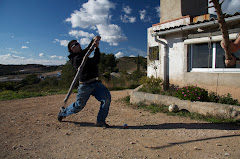
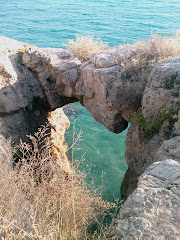
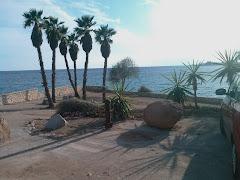
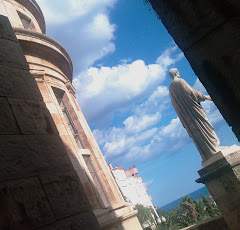
Was kindly invited for the weekend to Blanes, North of Barcelona. It was stunning......as you can see.

More great municipal Art


I just love Spain's initiative to utilize it's creative talents so abundantly.
This was in Sitges again.

Monday, May 17, 2010

LOCAL WINE TASTING


There;s always something going on here. Something to lift a boring week. We had a Tapas festival the other week whereby 20 or 30 restaurants put on special tapas selections with a glass of wine. These were cheaply prices to encourage people to cruise from one to another. I;m not sure if the council subsubized it. This weekend saw a local wine fair which coincided with some very summery weather. It was a tented affair on the main Rambla. 5 Euros bought you vouchers for 5 glasses (150ml) of wine. There were also local food artisans selling hams, cheeses and Fideua ( a kind of paella made with short noodles). There was also music and a kind of horse and trap parade too. All in all a very pleasant Sunday afternoon. Such a simple idea.

Here's a picture of a proper fideua from our summer staff party.

Tuesday, April 27, 2010

Pastisset, another sweet beauty.

To add to the array of pastry products there is the pastisset. This is originally from the Aragon region and specifically Teruel, but has become a part of the gastronomic culture of Tarragona and many other places in the region. Its a pasty-shaped product filled with that curious but delicious sweet preserve made from a certain type of squash, the flesh of which, when candied by simmering in sugar or honey syrup, shreds into strands, hence the name capell d'angel or "angels hair" . Anis and cinnamon are the common flavours and the dough is made with either olive oil or pork fat. Sometimes sweet moscatel wine is used to moistent the filling or the dough, and is often served alongside the pastisset as a 'chupito' (shot of liquor). Another variation is to make a sweet filling from sweet potato. Both are baked and dredged in sugar. I often have one for breakfast with a coffee.....hence the need for gym membership!

Monday, April 26, 2010

COCA.....NOT WHAT YOU'RE THINKING!!!!

Catalunya loves the Coca. They claim it pre-dated the Pizza. We will never know. But what I do know is that the town markets and shops are awash with a vast array of items named Coca. But they all seem to be radically different. Basically Coca refers to a wide variety of pastry products, both sweet and savory. Some clearly bear a strong resemblance to the Pizza, others to pies and others to brioche or other sweet nut-crusted breads.Officially there are 4 types, Covered coca (like a pie or pasty) Open....like a pizza or a sweet French "bande", Holey....like a doughnut in shape but much larger (includes the roscon de reyes, see separate post). Look in the labels section on the right margin of the blog for roscon) and "plain or naked....in other words un-garnished.

I haven't tried them all but here are some I saw in a local market and the savoury ones were amazing.


the pizza link is obvious...i'm talking real pizza, not high street pizza.


sweet and nutty with puff pastry


covered/enclosed or pasty-like


plain/nude and sweet

Saturday, April 17, 2010

MENU del DÍA

The Spanish revere lunch. It really is the oasis in the dessert of their day.
And what days. Long days. Hot days.
The history of being a largely agricultural nation meant many people worked the land. The climate that later brought the double-edged sword of tourism, burned a division into the day of the worker. Way too hot to do anything between 1pm and 5pm. So this became pleasure and rest time. The main meal of the day, the gathering of the family and a lengthy rest became a way of life.....and still is. I read that when Spain started to change and become an industrialized nation people were sucked from the land to the growing cities and life changed. People travelled to work which made it impractical/expensive to go home for lunch....even if you are allowed 4 hours. So the government made a law. Every restaurant was obliged to provide an affordable lunch so that people could maintain their tradition without having to go all the way home. And so was born the incredible value Menu del Día.
It is without doubt the best value meal available in Spain. Always 3 courses, often including wine, bread and water....sometmes coffee too.At time of writing the average price is between 8-12 euros. And this is also where the nation;s cooking traditions shine. No-fuss home cooking at it;s best. Don;t expect culinary gymnastics, garnishes, a smile or even conversation. But there is integrity cooked into every dish. A stoic, solid pride baked into each unsmiling cazuela that is banged down in front of you. Blue cigarette smoke still permeates these places, the best of which are packed every day by 3pm. Don;t make the tourist mistake of seeing restaurants empty at 1:30pm and assuming the are bad. Check back at 3pm and revise your opinion!
I still can;t make lunch my main meal. It just doesn;t work for me. I have tried but I can;t eat that much in the day...and I hate sleeping in the day too. And I STILL get caught out trying to do my shopping in the lunch "hour" "al estilo inglés" when everything is closed!!!
Some recent Menu del Día dishes.....

Huevos a la Riojana. Eggs baked in a spicy tomato sauce made with red wine and garnished with two slices of chorizo and some foaming garlic and parsley butter. Delicious, but piping hot which was frustrating. The eggs werent soft which would have been nicer. (Ive had hard boiled egg curry in India to which I would say the same) This, by the way was a starter!

Main course. Classic Catalan cooking. Duck with pears. Slow cooked, (almost confit) Duck (legs obviously) with lightly sautéd pears was a delight. Sticky, rich and falling apart, with just the pan juices as a sauce. Delicious....but don;t expect me to go back to work for at least 12 hours!
Catalan cooking often features meat and cooked fruit, or meat and shellfish togehter (mar y muntanya)(sea and mountain)

Another dish I had illustrates an important lesson to be learned in the appreciation of Catalan cooking. DO NOT JUDGE BY APPEARANCE! Paul Richardson refers to this in his book "A Late Dinner" . Banish any notions of modern food aesthetics. Understand that these dishes are born from a tough survival ethic and cannot countenence any pandering to vanity. In short, don;t be put off by ugly food. This dish looked pretty grim, but tasted wonderful. Broadbeans slowly cooked with morcilla (blood sausage) butiffara (another type of cooked sausage), and pork belly. A fore runner of real baked beans I suppose. The slow cooking had long since rendered any colour out of the beans but created a gravy that was truely wonderful. I have avoided this dish many times due to it's appearance (often in cold tapas counters) but have been thoroughly converted. This was also a starter!

PRETTY SITGES


The seaside resort of Sitges is the Catalan equivalent of Brighton. Once a simple fishing village, it became a magnate for avant garde artists ever since Santiago Rousiñol took up residnce in the late 19C. The 1960's saw this reputation develop further as intellectuals and free thinkers sought to escape the oppression of the Franco dictatorship. It became a residence and holiday destination of choice for affluent Spainards, many of whom had made money in the Americas and concequently comissioned impressive mansions in the Modernist and Noucentista styles which today give the town so much of its charm. It;s about as nice as any tourist-dominated town can be. double click on any image to enlarge.